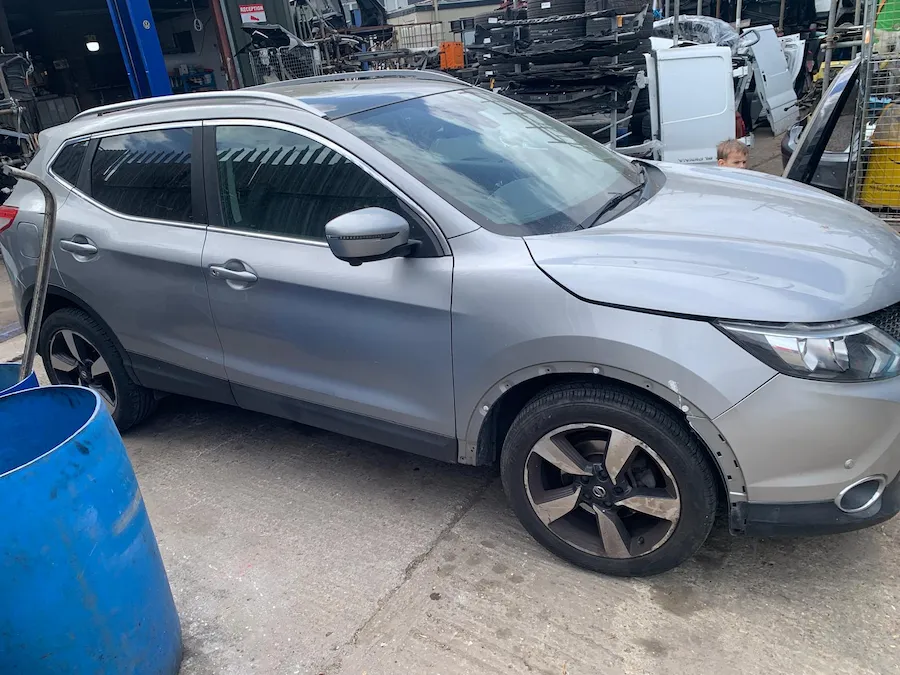
"Why won't my car start?" is one of the most common questions we get when someone calls about scrapping. Nine times out of ten, before the car ever reaches us, the answer was a tired battery that had been quietly dying for months. Knowing how long your battery should last — and recognising the signs it's on its way out — saves you the cost of a recovery callout and the hassle of a car that won't start when you need it.
We see hundreds of end-of-life cars come through our Southend yard every year, and we get a real, unfiltered look at how batteries actually fail in UK conditions. The numbers you read on most websites are manufacturer claims and best-case estimates. What follows is a more honest picture: how long batteries genuinely last on UK roads, why some die in two years and others last seven, and how to spot the warning signs early.
Disclosure: This article contains Amazon and eBay affiliate links. If you buy through our links we may earn a small commission at no extra cost to you — it helps support the Amber Autos blog. We only link to tools we'd genuinely recommend.
How Long Do Car Batteries Last? Quick Answer
In the UK, the realistic ranges for the three main battery types are:
| Battery Type | Typical Lifespan | Found On | Replacement Cost |
|---|---|---|---|
| Standard Lead-Acid | 3–5 years | Older cars without stop-start | £60–£120 |
| EFB (Enhanced Flooded) | 4–6 years | Entry-level stop-start cars, city cars | £100–£180 |
| AGM (Absorbent Glass Mat) | 5–7 years | Premium stop-start, modern German cars | £150–£280 |
| EV Traction Battery | 8–10 years (100,000–150,000 miles) | Electric vehicles | £3,000+ (whole pack) |
Those are the ranges. The reality on UK roads is that most batteries we see fail toward the lower end — usually because of how the car gets used rather than the battery itself. A 2017 Ford Fiesta that lives on the school run will often need a new battery at three years; the same car doing motorway commutes can easily reach five or six. Driving habits matter more than brand.
What Battery Type Does Your Car Have?
Before you can think about replacement, you need to know what's already fitted. The three types aren't interchangeable — putting a standard lead-acid battery in a car designed for AGM will cause warning lights, start-stop failures, and a battery that dies in six months. Here's how to identify yours:
- Open the bonnet and check the label. Most batteries have "AGM," "EFB," or "Stop-Start" printed clearly on the top or side. If you can see it, you've got your answer.
- Check the handbook. The owner's manual will list the battery specification, including type, capacity (Ah) and cold cranking amps (CCA).
- Use the registration lookup. Most UK battery suppliers (Halfords, Euro Car Parts, Tayna) have a number plate lookup that tells you exactly which battery your car needs.
- Has the car got stop-start? If yes, it almost certainly has either an EFB or AGM battery — never a standard lead-acid.
What Actually Kills Car Batteries in the UK
In our experience pulling batteries out of end-of-life cars, very few batteries die because they reached some natural age limit. Most fail because of how the car was used. Here are the genuine killers, ranked by how often we see them:
1. Short journeys
This is the single biggest cause of premature battery death in the UK. Every time you start the engine, the battery loses a chunk of charge. The alternator replaces it — but only if you drive long enough for it to fully recharge. Anything under 15 minutes typically isn't enough, and a car that only ever does short trips ends up running its battery progressively flatter every day. After a year or two of this, the battery's permanently sulphated and won't hold a full charge no matter what you do.
The fix: every couple of weeks, take the car for a 30–45 minute drive at motorway speeds, or use a smart battery charger overnight. We've covered smart chargers in our tools and buying guides.
2. Cold winters and damp summers
Battery performance drops by around 30% at 0°C and even more below freezing — which is why batteries fail on cold mornings rather than warm afternoons. The damp doesn't help either: corroded terminals create resistance that makes the alternator work harder and the battery charge less efficiently. Most UK batteries die in January and February for these combined reasons.
3. Sitting unused
Modern cars with alarms, immobilisers, infotainment systems and keyless entry have a constant background drain even when parked. Leave the car for three weeks unused and you're often looking at a flat or near-flat battery. Cars stored over winter, second cars used twice a month, and lockdown-era garaged vehicles all suffered for this reason.
4. Parasitic drains from aftermarket electronics
Dash cams, trackers, hardwired phone chargers and aftermarket alarms can all pull more current than you'd expect when the car is off. A poorly installed dash cam alone can flatten a battery in 4–5 days. We pull plenty of perfectly serviceable batteries from cars where the real problem was a badly wired accessory, not the battery itself.
5. The wrong battery fitted
Modern cars with stop-start systems are extremely fussy about battery type. If the previous owner (or even a high-street battery fitter) replaced an AGM with a cheaper EFB or lead-acid battery to save money, the car's battery management system will charge it incorrectly and cycle it too hard. These batteries often fail within 12 months. Always match the original specification.
Warning Signs Your Battery Is on the Way Out
Most batteries don't die suddenly — they show symptoms for weeks or months before they fail completely. The trouble is, drivers usually only notice on the morning the car won't start. Here's what to watch for:
- Slow starting, especially when cold. If the engine cranks more slowly than usual on cold mornings, the battery's losing capacity. This is the earliest reliable warning sign.
- Headlights dim at idle, brighten when you rev. Means the battery isn't holding voltage and the alternator's doing all the work.
- Stop-start system stops working. Modern cars disable stop-start when the battery falls below a certain state of charge. If it's not engaging at junctions any more, your battery's tired.
- Battery warning light on the dashboard. Could be the battery, could be the alternator. Either way, get it checked.
- Electrical glitches. Radio resetting, clock losing time, central locking acting up, infotainment crashing — all common signs of a battery that can't hold steady voltage.
- Swollen battery case or corrosion on terminals. Visible swelling means the battery's failed internally. Heavy white or blue-green corrosion on the terminals reduces charge efficiency.
- Rotten egg smell from under the bonnet. Sulphur smell means a battery is venting hydrogen sulphide gas — it's dying and potentially dangerous. Replace immediately.
How to Test Your Battery Yourself
You don't need to take the car to a garage to check battery health. A basic multimeter (~£10) or a dedicated battery tester (~£25–£40) gives you a reliable answer in under a minute.
The voltage test (multimeter):
- Leave the car parked for at least an hour with everything switched off. This lets the battery settle to its true resting voltage.
- Set the multimeter to DC voltage, 20V range.
- Touch the red probe to the positive terminal, black probe to the negative terminal.
-
Read the voltage:
- 12.6V or above — healthy, fully charged
- 12.4–12.5V — partially charged, may indicate parasitic drain or short journeys
- 12.2–12.3V — weak, charge or replace soon
- Below 12.2V — failing, replacement likely needed
Voltage alone doesn't tell the full story, though. A battery can show 12.6V resting but fail under load — which is what actually starts your engine. For a proper assessment you need a load tester or a tester that measures cold cranking amps (CCA). These cost £25–£50 and pay for themselves the first time you avoid an unnecessary garage diagnostic fee.
Affiliate picks for testing your own battery:
-
Basic multimeter (under £15): AstroAI digital multimeter is
the standard cheap-and-reliable choice — does voltage, current and
continuity. Fine for the once-a-month battery check.
→ Check the AstroAI on Amazon UK | Used on eBay UK -
Dedicated battery tester (£25–£40): The ANCEL BA101
measures CCA and gives a proper health assessment, not just resting voltage.
Significantly more useful than a multimeter for ongoing battery checks.
→ Check the ANCEL BA101 on Amazon UK | Used on eBay UK -
Smart charger to extend battery life: A CTEK MXS 5.0 keeps
a battery topped up over winter or for cars used infrequently. Pricey for a
charger but genuinely the best on the market — we see plenty of
CTEK-maintained batteries reach 7+ years.
→ Check the CTEK MXS 5.0 on Amazon UK | Used CTEK on eBay UK — strong used market, often half retail.
When to Replace Your Battery (Even If It Still Works)
A battery that works today can let you down tomorrow — and it almost always picks the worst possible moment. Here's our honest advice on when to replace proactively rather than reactively:
- Standard lead-acid battery: replace at 4 years. Don't wait for failure. Battery technology has moved on — even budget replacements are usually better than a 4-year-old original.
- EFB battery: replace at 5 years. Stop-start systems are unforgiving — once the battery's tired, the system disables itself constantly and the car becomes annoying to drive.
- AGM battery: replace at 6 years. AGM batteries fail more gradually than lead-acid, but when they go, they take half the car's electronics with them temporarily. Don't push past 7 years.
- Always replace before winter, not during. A battery that just survived last winter probably won't survive the next. Replace in October, not when you're stranded in February.
- Always replace before a long trip. A road-trip battery failure costs you a day, recovery, and frequently overpriced roadside replacement. The £150 you'd spend at home is the better deal.
How to Make Your Battery Last Longer
None of this is complicated, but it does require some attention. Drivers who do these things genuinely get more years out of their batteries:
- Drive for at least 30 minutes once a week. Long enough for the alternator to fully recharge what's been drained.
- Use a smart battery charger if the car sits. A trickle charger pays for itself within the first replacement battery you avoid.
- Switch off accessories before you start the engine. Heater, lights, heated seats, radio — let the engine fire first, then switch them on.
- Keep the terminals clean and tight. A 30-second annual check with a wire brush and a smear of petroleum jelly prevents corrosion-related issues.
- Don't leave the car with electronics on. Dome lights, glove box lights, boot lights — easy to leave on overnight, will flatten a battery by morning.
- Match the battery spec exactly when replacing. Right type (lead-acid/EFB/AGM), right capacity, right CCA. Skimping costs more in the long run.
When the Battery Isn't the Real Problem
Sometimes a "battery problem" is actually a sign the car itself is on its way out. Here are the situations where we'd suggest thinking carefully before spending £150–£280 on a replacement:
- Battery is the third or fourth one in five years. Suggests a charging system fault (alternator, voltage regulator) or a parasitic drain that hasn't been diagnosed.
- Battery dies alongside other major issues. Failed MOT, gearbox slipping, head gasket weeping, severe corrosion — fitting a new battery to a car about to fail elsewhere doesn't make economic sense.
- Car is worth less than the cost of repair. If your car's a 2010-something hatchback worth £400, putting £200 of new battery in it isn't always the right call. Sometimes the right answer is a fresh start.
We see plenty of cars come in for scrap with a brand-new battery still fitted — owners who spent £150 a fortnight before deciding to scrap. If you're uncertain whether a battery replacement is worth it, it costs nothing to get a free scrap quote first. Fault codes, tired batteries and mechanical issues don't reduce our scrap valuations — we work it out from kerb weight and current metal prices, not whether the car runs.
Recycling Your Old Battery
Car batteries contain lead and sulphuric acid. They cannot go in household waste, in skips, or in general scrap metal collections. They have to be disposed of through a licensed recycler. Most fitting centres (Halfords, Euro Car Parts, Kwik Fit) take old batteries free of charge when you buy a replacement. Local authority recycling centres also accept them.
If you scrap a car with us, the battery is removed, depolluted and recycled as part of our standard process — that's part of being a licensed Authorised Treatment Facility. We've written more about how we dismantle a scrap car if you want to see what happens behind the scenes.
Frequently Asked Questions
How long do car batteries last in the UK?
Most car batteries in the UK last 3–5 years for standard lead-acid, 4–6 years for EFB, and 5–7 years for AGM. UK conditions (short journeys, damp weather, cold winters) tend to push real-world lifespans toward the lower end of these ranges — particularly for cars used mainly for school runs and short commutes.
How do I know what type of battery my car has?
Open the bonnet and look at the battery casing — most have AGM, EFB, or "Stop-Start" printed clearly on the label. If there's no label, check the vehicle handbook or enter your registration on a battery supplier's website. Never replace an AGM or EFB battery with a standard lead-acid one — the car's battery management system will reject the charge and shorten its life dramatically.
What kills a car battery the fastest?
Short journeys (under 15 minutes) are the single biggest killer — the alternator never gets time to fully recharge what starting the car drained. Other major factors are leaving the car parked for weeks, extreme cold, parasitic drains from interior lights or aftermarket electronics, and using cheap budget batteries. Most UK batteries fail because of usage patterns, not age.
Can a car battery last 10 years?
Very rarely. We occasionally see 8-year-old batteries on cars that did long, regular motorway journeys, but anything past 7 years is exceptional. If your battery is 6+ years old and still working, replace it before winter regardless of how it feels — older batteries fail suddenly and almost always at the worst possible moment.
How can I check my car battery's health at home?
A basic multimeter or dedicated battery tester gives you a quick health check in under a minute. Test voltage with the engine off after the car has sat for at least an hour: 12.6V or above is healthy, 12.4–12.5V is partially charged, below 12.4V suggests the battery is struggling. For a proper test, you need a load tester or one with cold cranking amps (CCA) measurement.
Is it worth repairing or replacing a battery on an old car?
If the car is otherwise sound, yes — even AGM batteries cost £120–£200 and they last 5+ years. If the car has other major issues (failed MOT, gearbox problems, head gasket), spending £200 on a new battery may not make sense. We see plenty of cars where someone fitted a fresh battery weeks before deciding to scrap the vehicle. Get a scrap quote first if you're uncertain.
Need to scrap your car in Southend-on-Sea?
Get a free instant quote from Amber Autos LTD — free collection, bank transfer on collection, DVLA paperwork handled.
Get a Free Quote Call Now